Understanding the NDIS
NDIS Assistive Technology: Choosing Equipment That Works in Daily Life
Assistive technology can help a participant communicate, move, manage daily routines or take part in work and community life. The right device should fit the person and the activity it is meant to support.
What assistive technology can do
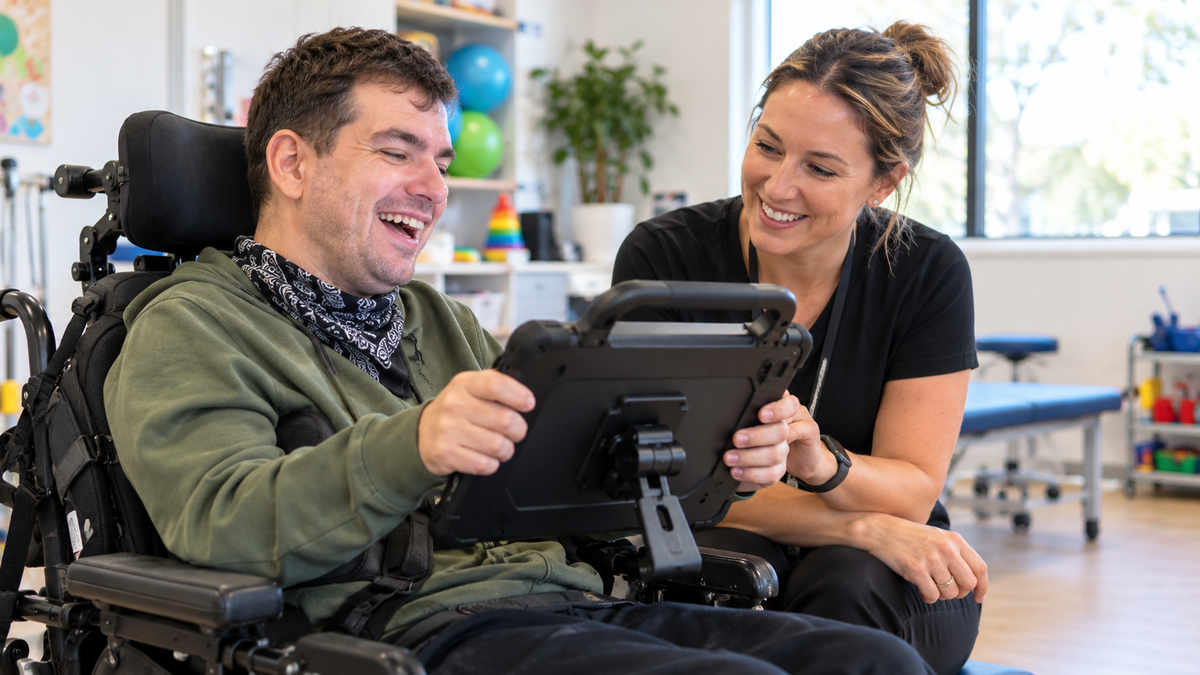
Assistive technology (AT) includes equipment, devices and systems that help a person do tasks they could not otherwise do, do them more easily or safely, or maintain independence. It may support mobility, communication, personal care, learning, memory, safety, home access or participation.
The benefit depends on the participant’s needs and environment. A communication device may help someone express choices and participate in appointments. A mobility aid may reduce fatigue and improve access. Equipment should support an outcome the participant values, not be selected because it is popular or has impressive features.
Funding depends on the participant’s plan, the item’s purpose, cost and current NDIS rules. AT is not automatically funded because a clinician recommends it or because it is described as disability equipment.
Choose equipment for a specific everyday task
Write down the task that is difficult and what the participant wants to change. Where does the difficulty happen? What equipment or strategy is already used? What happens on a better or worse day? What access, communication, sensory, strength, positioning or safety needs matter?
Consider the whole setup: whether the equipment fits the home or vehicle, how it will be transported, charged, cleaned, stored and maintained, and whether the participant or support workers can use it safely. For digital AT, check compatibility, access needs, subscriptions and technical support.
Seek advice from an appropriately qualified AT advisor or assessor when the current rules require it or when the item is complex. Their advice should explain why this option is suitable, alternatives considered, risks, training and expected maintenance.
Assessment and cost levels
Current NDIA guidance distinguishes low-cost AT under $1,500, mid-cost AT from $1,500 to $15,000, and high-cost AT over $15,000. The evidence and purchasing steps differ by cost level. Thresholds and rules can change, so check the latest AT guide before purchase.
For low-cost items, check the plan first and confirm that the item is an NDIS support and funding is available in the correct budget. Mid-cost items generally require advice from an AT advisor. High-cost items require an assessment by an AT assessor and a quote; the NDIA must approve funding before purchase.
These thresholds do not mean that every item below a price is automatically funded. The item still needs to meet plan and support rules, and the participant must follow the claiming guidance that applies to their plan.
Trial, training and implementation
A trial can reveal problems that a written report may miss. Where possible, test equipment in the setting where it will be used, with the participant and relevant support people involved. Check comfort, control, setup time, safety, communication, reliability and whether the participant wants to use it.
Before purchase, identify who will provide training, delivery, setup, repairs and maintenance. Ask about warranty, replacement parts, consumables, insurance, battery life and what happens if the equipment fails. Include training and ongoing support costs in the overall comparison.
For communication technology, make sure the participant can access it and has a way to express preferences or request help. For mobility or transfer equipment, confirm the environment, worker training and safe-use instructions.
Check these points before buying
- Read the plan and confirm the correct AT budget and available funds.
- Check current low-, mid- or high-cost rules and evidence requirements.
- Get the required advisor/assessor report and quote.
- Obtain NDIA approval for high-cost AT before purchase.
- Trial the item when appropriate and document the participant’s response.
- Agree on delivery, setup, training, maintenance and repairs.
- Keep the invoice, assessment, quote and approval with plan records.
If an item is urgently needed for safety, contact the NDIA or my NDIS contact and ask about the correct process rather than buying first and hoping for reimbursement.
Frequently asked questions
Can I buy AT before it is approved?
For high-cost AT, NDIA approval is required before purchase. Mid-cost and low-cost items have their own steps; check the current guide and plan first.
Does a report guarantee funding?
No. An advisor or assessor provides evidence. The NDIA makes the funding decision under current rules.
Can NDIS funding cover repairs or training?
Some related supports may be fundable when they meet plan and NDIS support rules. Check your plan and the current AT guidance for the item and service.
Official sources and further reading
- NDIS guide to assistive technology
- How to buy or rent mid-cost or high-cost AT
- How to trial assistive technology
- How to buy low-cost AT
A practical next step
Begin with the participant’s task and preferences, then work through plan fit, required advice, trials and full lifecycle costs. Keep the participant involved, check the current plan and record any decision or agreement that affects service delivery.