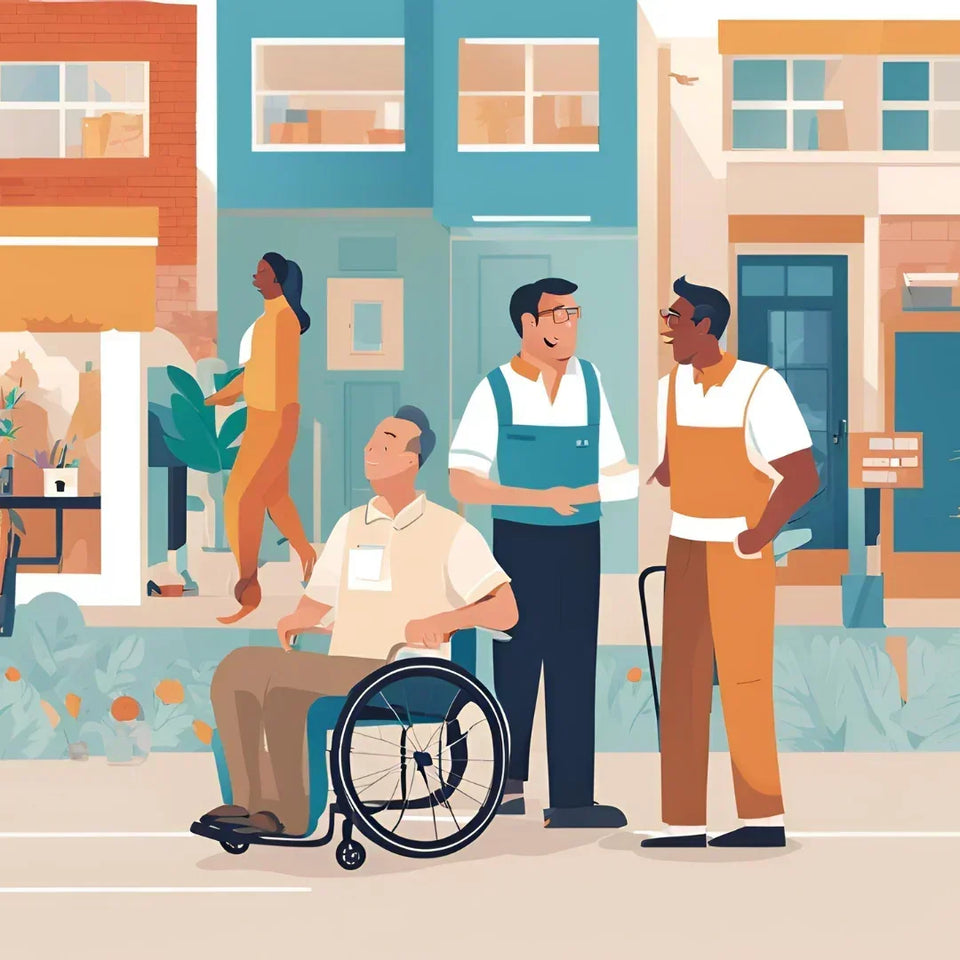
Understanding Dementia with Lewy Bodies involves more than knowing its medical name. This guide offers Australian families, people with disability and support coordinators information about the condition, what everyday support can look like and how the NDIS considers access. We focus on individual abilities and goals, not assumptions about a diagnosis.
Understanding Dementia with Lewy Bodies
Dementia with Lewy bodies (DLB) is a progressive brain condition that can cause changes in attention, thinking, movement, sleep and perception. A person may have pronounced day-to-day fluctuations in alertness. Visual hallucinations and Parkinsonian movement features are also recognised, although experiences and severity differ. Treatment and diagnosis should be managed by qualified health professionals.
People experience disability in different ways. A well-designed support arrangement starts by asking the individual about what matters to them, what helps them participate in everyday life and where practical barriers arise.
Traits, symptoms and functional impacts
Some possible impacts are outlined below. They are not diagnostic criteria, and any medical concern should be assessed by an appropriate professional.
- Changing attention and alertness, which may be much better at some times than others
- Difficulty with visual perception, decision-making, planning and organising tasks
- Slow movement, muscle stiffness or difficulty walking
- Visual hallucinations or misperceptions in some people
- Disturbed sleep and possible falls or dizziness
- Growing need for assistance with routines, personal care or navigating familiar environments
Living with Dementia with Lewy Bodies: the everyday experience
A person who manages breakfast independently on one day may need prompts, supervision or help on another. Familiar routes and formerly routine tasks can become confusing, and consistent respectful communication is important.
Functional needs should be described with concrete examples across communication, social interaction, learning, mobility, self-care and self-management. Consider activities the person manages without assistance, those requiring supervision or prompting, and circumstances requiring equipment or hands-on help. This helps avoid overestimating or underestimating needs.
Practical, respectful support strategies
- Communicate calmly, explain activities clearly and invite the person's participation in decisions.
- Keep daily routines familiar without treating the person as incapable.
- Consider falls risk and environmental adjustments through qualified assessment.
- Seek medical advice for sudden worsening, distressing hallucinations or changes in consciousness.
The participant should remain central to choices about their care. Where specialist medical needs exist, the provider must work within trained staff competencies and follow the person's current instructions from qualified clinicians.
Is Dementia with Lewy Bodies recognised under the NDIS?
Lewy body dementia appears in the historical NDIS List B, a guide to the likelihood of permanent impairment. However, the age rule is particularly important: people generally must apply to the NDIS before turning 65. Most new older applicants will instead need to explore the aged care system.
NDIS disability access is decided using age and residence rules, evidence of one or more impairments that are or are likely to be permanent, substantial reduction in functional capacity, effects on participation, and likely lifetime need for NDIS supports. In relevant situations, an early intervention pathway is also possible. Medical diagnosis and NDIS disability eligibility are not interchangeable.
Compare the NDIS List A, List B and List D historical appendices with the current NDIS disability requirements. List A identifies conditions likely to meet the disability criteria; List B identifies conditions likely to involve a permanent impairment. These descriptions matter when preparing evidence, and neither list is a general catalogue of everyone who is guaranteed a plan.
Evidence to prepare for an NDIS application
Ask treating professionals for information that describes how the person's impairment affects everyday activities. Evidence may include the following, depending on the condition and individual's circumstances:
- Diagnostic evidence specifying a relevant subtype or severity where the published list includes a restriction.
- Professional observations of ongoing impairment, and appropriate clinical information about treatment options.
- Functional assessments showing practical difficulties with personal care, mobility, communication or organising routines.
- Examples of assistance, equipment or supervision required, including how often it is used.
- Information about goals, participation in study, employment or community life, and whether support needs are likely to persist.
A brief account of a typical day and a more difficult day can make the person's actual needs easier to understand. Where an impairment changes over time, describe progression and fluctuations; no one should be judged only by their best day.
Disability supports that may be relevant
A person's approved plan may, where funding and rules permit, include help with self-care and daily living, community participation, skill development, assistive technology and disability-related allied health services such as occupational therapy, physiotherapy or speech pathology. Support coordination may be appropriate for some participants. Decisions must reflect actual goals and funding; no therapy or equipment is automatic because a diagnosis appears on a historical list.
Clinical treatment, medication, surgery, ordinary hospital care and management of health conditions remain principally health-system responsibilities. Disability-related health supports can be eligible in some circumstances under specific NDIS rules. Complex tasks must have the required clinical plans and staff training.
How Beyond Health Services can help
Our team can talk through suitable daily living support, community access, relevant disability-related allied health or nursing services, and support coordination. We value the person's preferred communication methods, routines, identity and goals. We can discuss support requirements with participants, their nominees, families and support coordinators so that staffing and service arrangements are appropriate to the individual's funded needs.
Before services commence, we discuss the referral process, the individual's care requirements and the supports in their NDIS plan.
Frequently asked questions about Dementia with Lewy Bodies
What does the NDIS's historical list say about Dementia with Lewy Bodies?
Lewy body dementia appears in the historical NDIS List B, a guide to the likelihood of permanent impairment. However, the age rule is particularly important: people generally must apply to the NDIS before turning 65. Most new older applicants will instead need to explore the aged care system.
Does a listed diagnosis guarantee NDIS eligibility?
No. The NDIA must consider the full access requirements, including age and residence, functional impairment and individual supporting evidence. Funding decisions are separate from medical diagnoses.
Is dementia with Lewy bodies the same as Alzheimer's disease?
No. They are different neurodegenerative conditions, although some cognitive and daily living impacts can overlap.
Can someone over 65 apply to the NDIS for the first time?
Generally, the NDIS requires people to be younger than 65 on the date they apply. Older people should explore aged care and other support pathways.
Do people with DLB always experience hallucinations?
No. Hallucinations are common but not universal; the care approach should be individual and clinically informed.
How do we start organising disability support?
Identify the person's goals and day-to-day needs, review the funded supports in their plan, and contact a provider to discuss the right service and referral process.
We are here to listen
Tell us about the person's support goals, communication preferences and daily routines so we can discuss next steps that fit their circumstances.
Contact Beyond Health Services · support@beyondhealthservices.com.au
Information reviewed October 2026. General educational information only; not a substitute for clinical assessment or an NDIA decision. Clinical source: health information and condition overview. NDIS source: NDIS access guidance.