Niemann-Pick Disease can affect everyday life in ways that are not always immediately visible. Families, support coordinators and participants often need clear information about the condition, NDIS access and practical help. This guide explains what is known, how functional impacts can be documented and how services might fit individual goals.
Understanding Niemann-Pick Disease
Niemann-Pick disease describes several inherited disorders involving how cells handle or store lipids. Types A and B are associated with acid sphingomyelinase deficiency, while Type C involves problems moving cholesterol and other lipids within cells. Neurological decline can occur in Type A and Type C; Type B may have different organ and mobility impacts. Accurate subtype identification is important.
Importantly, a diagnosis is not a measure of a person's identity, independence or capacity for a meaningful life. The right approach starts with listening to the person, recognising individual strengths and understanding the support they actually want and need.
Characteristics, symptoms and functional impacts
Possible features include the following. These are not universal and should not be used as an informal diagnostic test.
- Differences in growth, feeding or organ function in some forms
- Problems with balance, coordination, walking or fine motor control in neurological forms
- Speech or swallowing difficulties that may affect everyday participation
- Changes in thinking, learning or memory in some affected people
- Possible vision or eye movement difficulties
- The age of onset and rate of progression vary substantially
How Niemann-Pick Disease can affect daily living
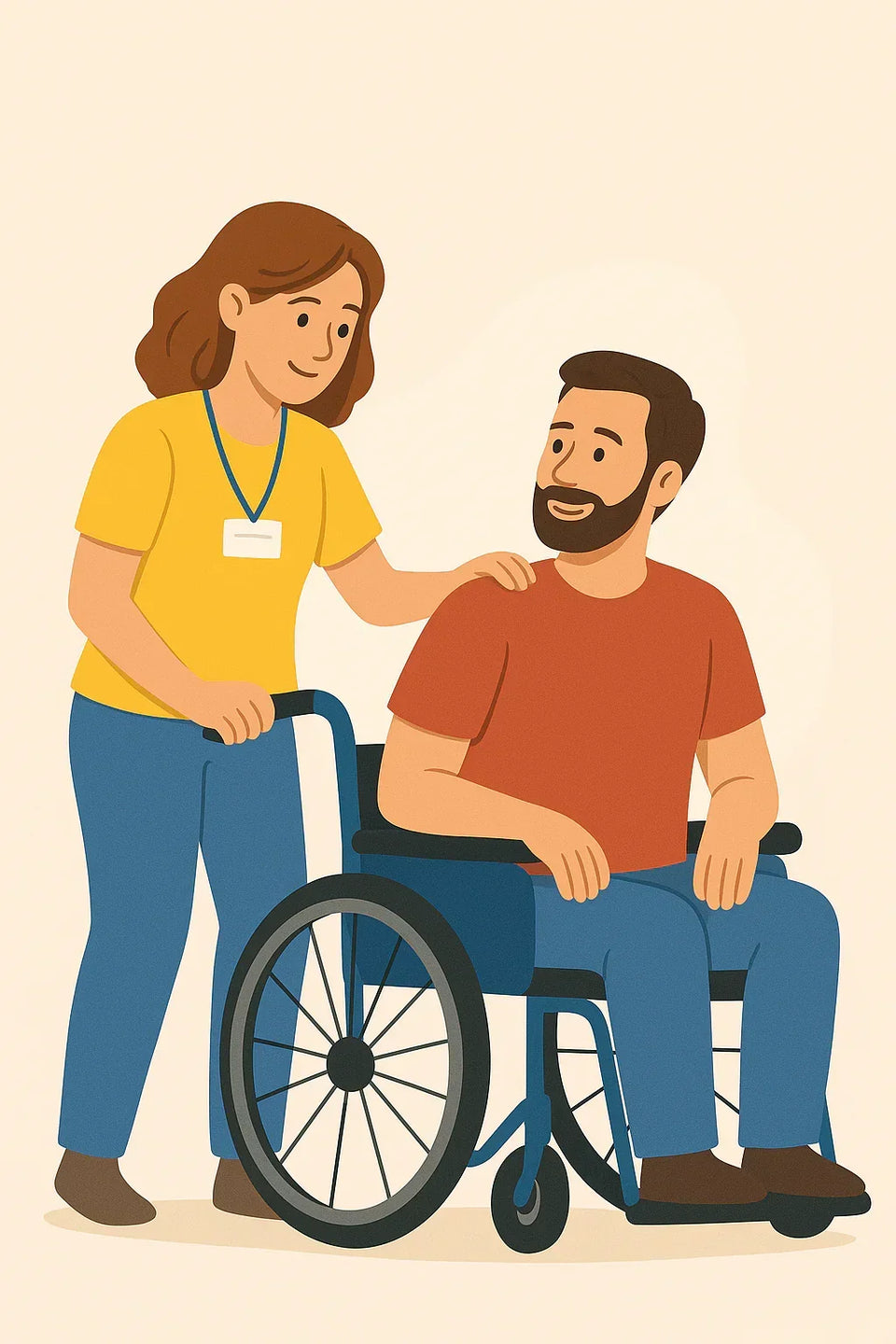
For one person, the main needs are accessible communication and support around mealtimes. Another may need guidance with mobility, memory or community outings as their neurological function changes.
When planning supports, explore six practical areas with the individual or their chosen representative: communication, social interaction, learning, moving around, self-care and self-management. Look at what a person can do on their own, what they can complete with prompts, what requires physical assistance and which tasks depend on equipment or changes to the environment.
Supporting the person respectfully
- Confirm the individual's subtype and clinically documented functional needs; avoid generalising from the diagnosis.
- Use mobility, communication and safe-eating supports only in accordance with relevant professional assessments.
- Record changing daily support needs over time to help inform plan discussions.
- Respect participant-led activity choices and coordinate appropriately when multiple health specialists are involved.
Support should protect personal choice and privacy. Complex health tasks require appropriate clinical guidance, consent, training and competency rather than assumptions based on the diagnosis.
Niemann-Pick Disease and NDIS eligibility
The published List A specifically names Niemann-Pick Types A and C within severe lysosomal storage disorders. Niemann-Pick disease also appears broadly in List B. These different entries should not be taken to mean every subtype or presentation has identical functional impacts.
The NDIS is an individual disability support scheme, not a general medical benefits program. Under disability access rules, the NDIA considers age and residence, evidence of an impairment that is or is likely to be permanent, substantial reduction in functional capacity, its effect on participation and likely ongoing need for NDIS supports. An early intervention pathway may also be available in relevant circumstances. The diagnosis or historical listing is only one part of the evidence.
The NDIA's published List A and List B appendices explain why some diagnoses are treated as more likely to satisfy specific elements of the disability test. Review those alongside the current disability requirements before relying on older terminology or applying.
What evidence should be prepared?
Genetic or metabolic specialist evidence identifying subtype, functional assessments of neurological and physical impairments, current communication or swallowing plans and examples of ongoing assistance.
A strong application describes functioning rather than relying only on a diagnosis. Consider gathering:
- Documentation confirming the diagnosis, specific type and relevant permanent impairments from the appropriate specialist.
- Examples of assistance needed for mobility, communication, learning, self-care or organising daily routines.
- Reports from occupational therapists, physiotherapists, speech pathologists or other relevant professionals showing real-world limitations.
- What suitable treatments or supports have been considered, tried or ruled out, and which impairments remain.
- Details of equipment, modifications, supervision or communication systems needed for participation, and the expected duration of those needs.
It may help to write down a typical day and a difficult day, including what happens without assistance. If the person's condition changes over time, explain fluctuations and progression rather than describing only their best or worst day.
Supports that may be relevant under an NDIS plan
Depending on a participant's approved plan and the applicable rules, disability-related support may involve assistance with personal care, supported community access, developing independence in everyday tasks, occupational therapy, physiotherapy, speech pathology, assistive technology or support coordination. The nature and frequency of support must reflect individual goals and funding; no item is guaranteed because of the condition name.
Specialist diagnosis, medications, operations, disease treatments and general medical monitoring are primarily healthcare responsibilities. Some disability-related health tasks may be separately eligible for NDIS funding when the rules are met, but they require individual assessment and appropriate professional oversight.
How Beyond Health Services can help
Beyond Health Services works with people with disability, families, nominees and support coordinators to discuss practical, person-centred support. We can explore daily living assistance, community participation, support workers, relevant disability-related therapy services, nursing supports and support coordination. We aim to match staff skills and communication approaches to the person's requirements and work alongside their existing care team.
Before services begin, we discuss the person's goals, preferences, documented needs and available plan funding, then arrange the appropriate referral and service process.
Frequently asked questions about Niemann-Pick Disease and the NDIS
Is Niemann-Pick Disease a condition the NDIS has historically recognised?
The published List A specifically names Niemann-Pick Types A and C within severe lysosomal storage disorders. Niemann-Pick disease also appears broadly in List B. These different entries should not be taken to mean every subtype or presentation has identical functional impacts.
Does being on an NDIS list mean automatic approval?
No. The list is guidance about one or more parts of the disability requirements. Individual evidence, age, residence and other applicable criteria are considered by the NDIA.
Are Types A, B and C medically the same?
No. The genetic mechanisms and common clinical features differ, so a specialist should identify the type and its specific consequences.
Does List A include Type B?
The historical List A specifically identifies Types A and C; Type B is not included in that particular entry, though List B and ordinary access criteria may be relevant.
Can someone with Niemann-Pick disease require changing levels of support?
Yes. Some forms are progressive and needs may change. Support records and clinical reports should reflect the person's current abilities.
What should I prepare before speaking with a support provider?
It helps to share the person's goals, daily assistance needs, communication preferences, existing care arrangements and any relevant NDIS funding. Clinical plans should be provided where specialist support is involved.
Support that reflects your needs
We would welcome a conversation about what matters to you, practical ways to build independence and how suitable support might fit your plan.
Contact Beyond Health Services · support@beyondhealthservices.com.au
Reviewed October 2026. This is general information, not personalised medical or NDIA eligibility advice. References: MedlinePlus Health Information and NDIS disability requirements.