Whether you are a person with Cortical Deafness, a family member or a support coordinator, understanding disability support begins with the individual's actual life. This guide covers the condition, the functional impacts that may matter, historical NDIS eligibility guidance and practical questions to consider before organising support.
Understanding Cortical Deafness
Cortical deafness is an uncommon auditory disorder resulting from damage to brain regions involved in processing sounds. The ear itself may be able to detect sound, while recognition or interpretation is seriously disrupted. People often need individual communication strategies and may have other neurological effects.
No diagnosis fully describes an individual's preferences, abilities or goals. Support works best when the person is involved in decisions and when practical activities are considered rather than stereotypes.
Common features and functional considerations
The following features may occur, but not everyone experiences the same symptoms, severity or rate of change.
- Difficulty recognising environmental sounds
- Limited understanding of speech through hearing
- Communication barriers in unfamiliar situations
- Need for accessible warnings and visual information
- Possible coexisting cognitive or physical impairments
What life with Cortical Deafness can look like
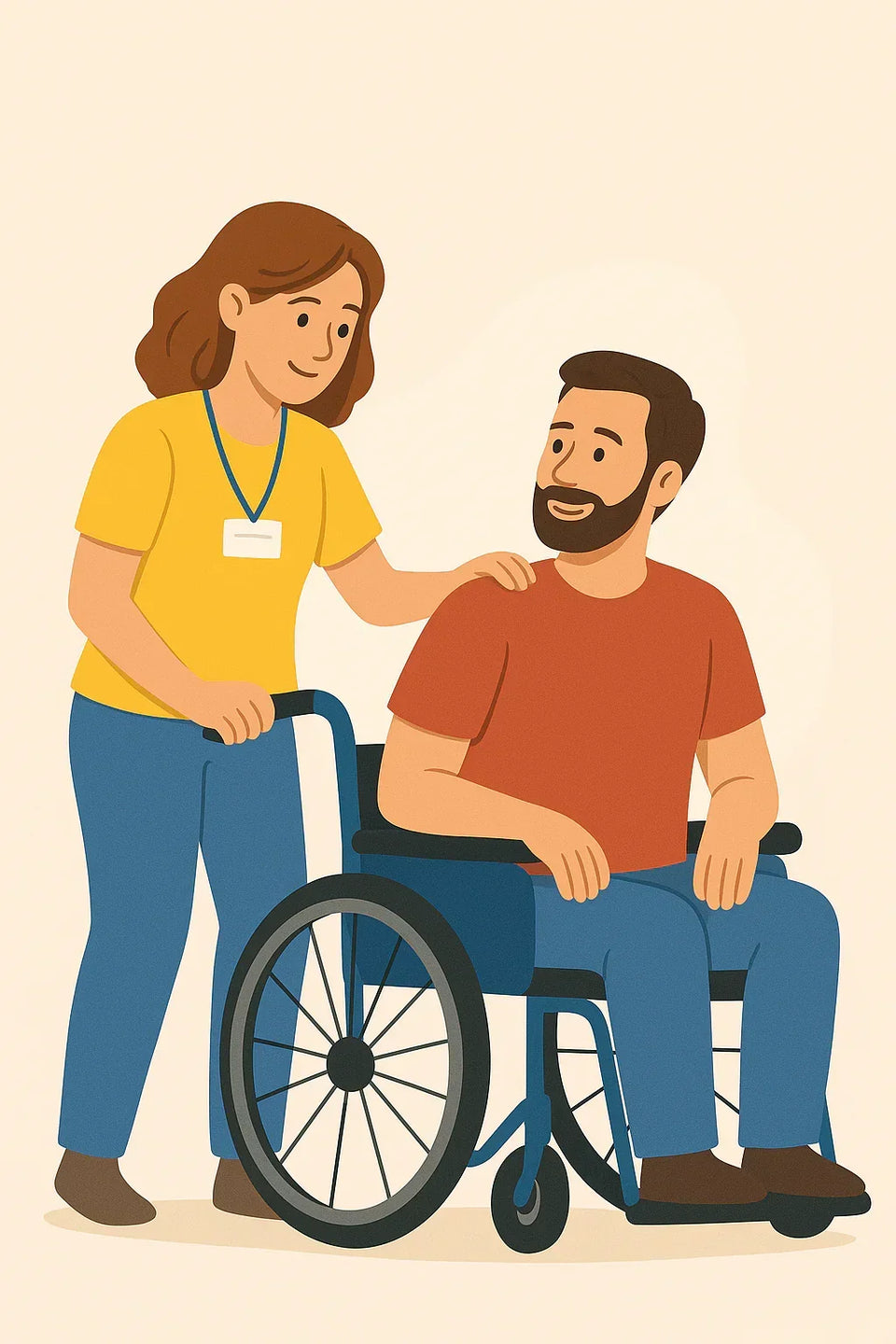
Support can include accessible communication, alternative alerts and help participating in community and social activities.
Everyday functioning is important because a medical diagnosis alone cannot show the level of support someone needs. Consider whether the person requires assistance with communication, mobility, learning, social interaction, self-care or self-management. For example, is help required for transfers, shopping, preparing meals or accessing appointments? Does equipment enable greater independence? Do needs change over time or between good and difficult days?
Practical and respectful support strategies
- Start by asking the individual what is most important and which tasks they want to do independently.
- Use clear, accessible information and the person's preferred communication method.
- Discuss mobility, positioning, home accessibility or assistive devices with a relevant qualified allied health professional.
- Offer supports that make social and community participation meaningful rather than focusing only on personal care.
- Ensure clinical issues and treatments are directed by the healthcare team; do not improvise medical procedures.
Can people with Cortical Deafness access the NDIS?
Cortical deafness is included on the historical NDIS List B.
The NDIS distinguishes disability access requirements from a medical condition alone. The NDIA considers the applicant's age and residency, whether an impairment is or is likely to be permanent, substantially reduced functional capacity in one or more everyday domains, impacts on participation and the likely need for NDIS support throughout life. Eligible early intervention circumstances are considered separately.
List A indicates conditions likely to meet the disability requirements when the published criteria are met. List B indicates conditions likely to result in permanent impairment, but further evidence may be required to show their functional impact. Being named in a list is not a guarantee of a funded service or of the size of a plan. The historical lists are not a complete catalogue of every diagnosis that could be eligible.
Official sources: published List A and List B appendices and current NDIS application guidance.
What evidence is helpful for NDIS access?
A well-prepared application should explain how the person's impairment affects them, how long it is expected to last and which tasks require disability-related support. Useful evidence may include:
- Diagnosis and specialist documentation of permanent or likely permanent impairment.
- Examples of ordinary daily tasks requiring support, prompting, supervision, accessible communication or equipment.
- Relevant functional assessments from occupational therapists, speech pathologists, physiotherapists, audiologists or vision professionals.
- Details of suitable treatments considered or tried and any ongoing impairment.
- Information about the person's goals, community access, work or study participation and expected long-term support needs.
Ask professionals to be specific about activities and frequency of support rather than only copying diagnostic terminology. Evidence should be individualised and accurately describe the person's current abilities.
What disability supports may be relevant?
Depending on an individual's approved plan and NDIS funding rules, assistance might include support workers for daily living or community access, skill development, occupational therapy, physiotherapy, speech pathology, appropriate assistive technology and support coordination. Some participants may have complex disability-related health needs that require approved support, current clinical instructions and trained personnel.
Routine medical assessments, medicines, hospital treatment and disease-specific medical care generally belong to the health system. Funding is based on disability-related need and plan rules, not automatically granted for a particular diagnosis.
How Beyond Health Services can help
Beyond Health Services can discuss person-centred support workers, personal care, community participation, relevant disability-related therapies, nursing and support coordination. We work with participants, nominees, families and support coordinators to understand communication preferences, routines, accessibility requirements and individual goals. We aim to match the service to what will make a practical difference in daily life.
When you decide to proceed, our team will provide the relevant referral link and discuss care requirements, available funding and appropriate service arrangements.
Frequently asked questions about Cortical Deafness
Is Cortical Deafness on the historical NDIS condition lists?
Cortical deafness is included on the historical NDIS List B.
Does appearing in List B automatically qualify someone for the NDIS?
No. List B is guidance regarding a condition's likely permanence, while further evidence about the individual and other access criteria is considered.
What difficulties might affect daily life?
Difficulty recognising environmental sounds; Limited understanding of speech through hearing; Communication barriers in unfamiliar situations. The person may experience some, all or none of these impacts.
What should I collect before applying?
Bring specialist reports, functional assessments and specific information about communication, mobility, self-care and other everyday tasks that require assistance.
Can a participant receive therapy and support workers?
These supports may be relevant where approved under the individual's plan and the funding rules. No service is guaranteed by a diagnosis alone.
How do I enquire about support with Beyond Health Services?
Tell us what the person wants to achieve and what kind of support they are looking for. If you decide to proceed, we will send the appropriate referral link.
Let's discuss your support goals
We welcome questions about your everyday routines, accessibility needs and the next steps for arranging personalised support.
Contact Beyond Health Services · support@beyondhealthservices.com.au
Educational information reviewed October 2026. This is not a clinical assessment or NDIS eligibility decision. Visit the NDIS for current requirements.