Finding reliable information about Menkes Disease and the NDIS can be difficult, especially where a diagnosis has several forms or a person needs help with more than one activity. This guide explores the condition, its possible daily impacts, access requirements and disability-related supports in Australia.
What is Menkes Disease?
Menkes disease, also called Menkes syndrome, is an inherited disorder affecting the body's transport and use of copper. It can involve significant neurological disability, low muscle tone, seizures, feeding and growth difficulties, and characteristic sparse or kinky hair. Different presentations, including the milder occipital horn syndrome, must not be treated as though they have identical functional impacts.
Every person is different. Their own abilities, interests and preferences should shape support arrangements, rather than an assumption that everyone with this diagnosis needs the same care.
Recognising characteristics and possible impacts
These are features that can occur and are not a substitute for a clinical assessment. Not every individual experiences all of them.
- Developmental delay and neurological changes in childhood
- Low muscle tone and reduced motor control
- Potential seizures and changing mobility abilities
- Feeding, growth or swallowing difficulties
- Differences in communication and dependence on daily assistance
- Variable severity, including distinct milder related presentations
How Menkes Disease may affect everyday activities
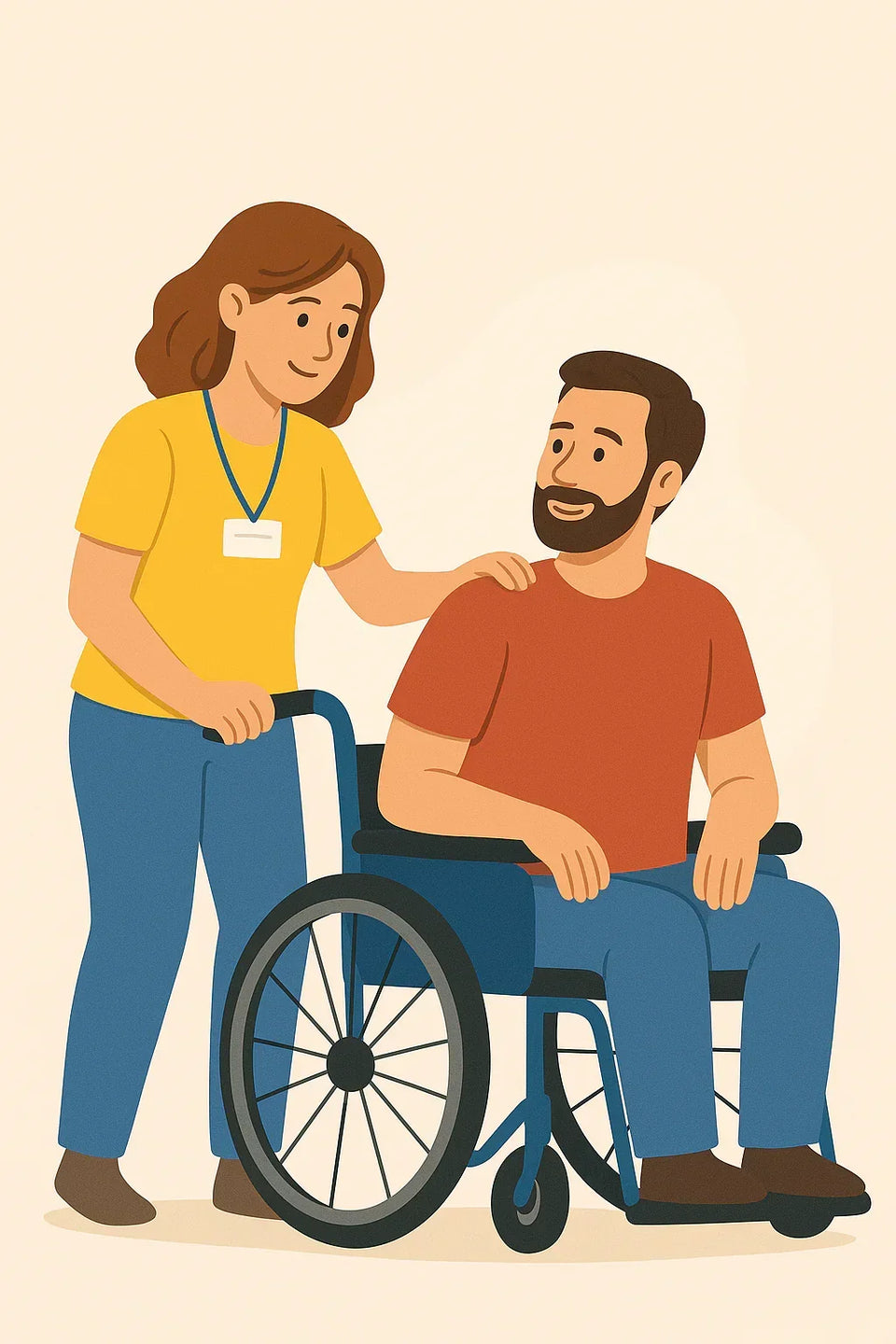
Depending on the individual, families may need help with comfortable positioning, safe transfers, communication, personal care and participating in meaningful daily activities alongside specialist healthcare.
Everyday life involves more than medical appointments. Consider communication, learning, movement at home and in the community, self-care, self-management, friendships and preferred activities. Recording what can be done independently, what requires prompting and what needs direct physical assistance gives a clearer account of functional capacity.
Practical strategies for families and support teams
- Respect and support the person's preferred communication methods and sensory needs.
- Work with qualified therapists on movement and safe handling.
- Refer disease-specific medical treatment and nutritional issues to treating professionals.
- Include families and nominees in practical routines while maintaining the individual's own voice.
Positive support practices focus on dignity, choice, consent and independence where possible. Any high-intensity or clinical tasks need the required individual plans, training and authorisation.
Does Menkes Disease qualify for NDIS support?
Menkes disease is included in the published List B. The document describes conditions likely to result in permanent impairment; it does not waive age, residence, functional capacity or other applicable requirements.
The NDIS considers whether a person meets age and Australian residency rules, has disability arising from a permanent or likely permanent impairment, has substantially reduced functional capacity in at least one relevant area, experiences effects on participation and is likely to require NDIS supports for life. Early intervention has separate criteria. The disability name alone does not settle the decision.
The NDIS historical List A and B appendices provide guidance about diagnoses likely to meet some criteria. Review the current access rules as well; the final decision is always made by the NDIA.
Preparing information for an NDIS application
The most useful evidence connects a documented impairment to actual restrictions in daily life. A specialist diagnosis is valuable, but does not show on its own whether assistance is needed with personal care, communication or community participation.
- Obtain relevant specialist documentation, including subtype or severity where historical list wording is specific.
- Describe the permanence of the impairment and the effect of treatments already considered or received.
- Document everyday activities that require help, equipment, supervision or environmental modifications.
- Include functional assessments from allied health practitioners when they directly illustrate disability-related needs.
- Record personal goals, impacts on social or work participation and the expected ongoing requirement for support.
Where abilities vary between days or over time, describe both the changes and the usual level of assistance rather than relying only on a good day or a difficult day.
Potential NDIS-funded supports and health system responsibilities
Subject to the person's individual approved plan, disability-related assistance may include personal care, community participation, support to practise everyday skills, relevant allied health input, assistive equipment and support coordination. Which supports are funded, their purpose and how much is available depend on NDIA rules, the person's goals and the approved plan.
NDIS funding is not general medical insurance. Diagnosis, medication, medical treatment, operations and ordinary clinical care are predominantly health-system responsibilities. Some specialist disability-related health supports have specific funding requirements. Support workers should not carry out complex healthcare tasks without necessary authorisation, clinical instructions and training.
How Beyond Health Services can assist
Beyond Health Services discusses individual goals and provides person-centred disability support arrangements across daily living, support workers, community access, relevant allied health services, nursing supports and support coordination. We listen to the participant and their family or chosen representative, understand communication preferences, review practical needs and discuss suitable staff skills.
Before arranging a service, we review the participant's care requirements, funding and referral process. We encourage collaboration with the person's existing healthcare professionals when a service involves complex needs.
Frequently asked questions about Menkes Disease
Does Menkes Disease appear in historical NDIS condition lists?
Menkes disease is included in the published List B. The document describes conditions likely to result in permanent impairment; it does not waive age, residence, functional capacity or other applicable requirements.
Does a diagnosis mean a person's NDIS application will be approved?
No. The NDIA checks the full access rules using the individual's circumstances and professional evidence. The condition lists are relevant guides, not an unconditional guarantee.
Is Menkes disease related to copper?
Yes. Genetic changes affect copper transport, which is important for normal bodily and neurological functions.
Does every person have the same presentation?
No. Classic Menkes syndrome can be severe, while some related forms differ considerably.
Could NDIS support help with personal care?
Where the person is eligible and their plan allows, disability-related personal care and community supports may be considered.
What should I have ready before discussing disability support?
Bring information about the person's goals, usual routines, communication needs, the funded supports in their plan and any professional instructions relevant to the services requested.
Find support that fits your life
Tell us about what the individual wants to achieve and the day-to-day help that could make a meaningful difference.
Contact Beyond Health Services · support@beyondhealthservices.com.au
Information reviewed October 2026. Educational guide only, not medical advice or a decision about NDIS eligibility. Clinical background: condition reference; NDIS rules: official NDIS guidance.