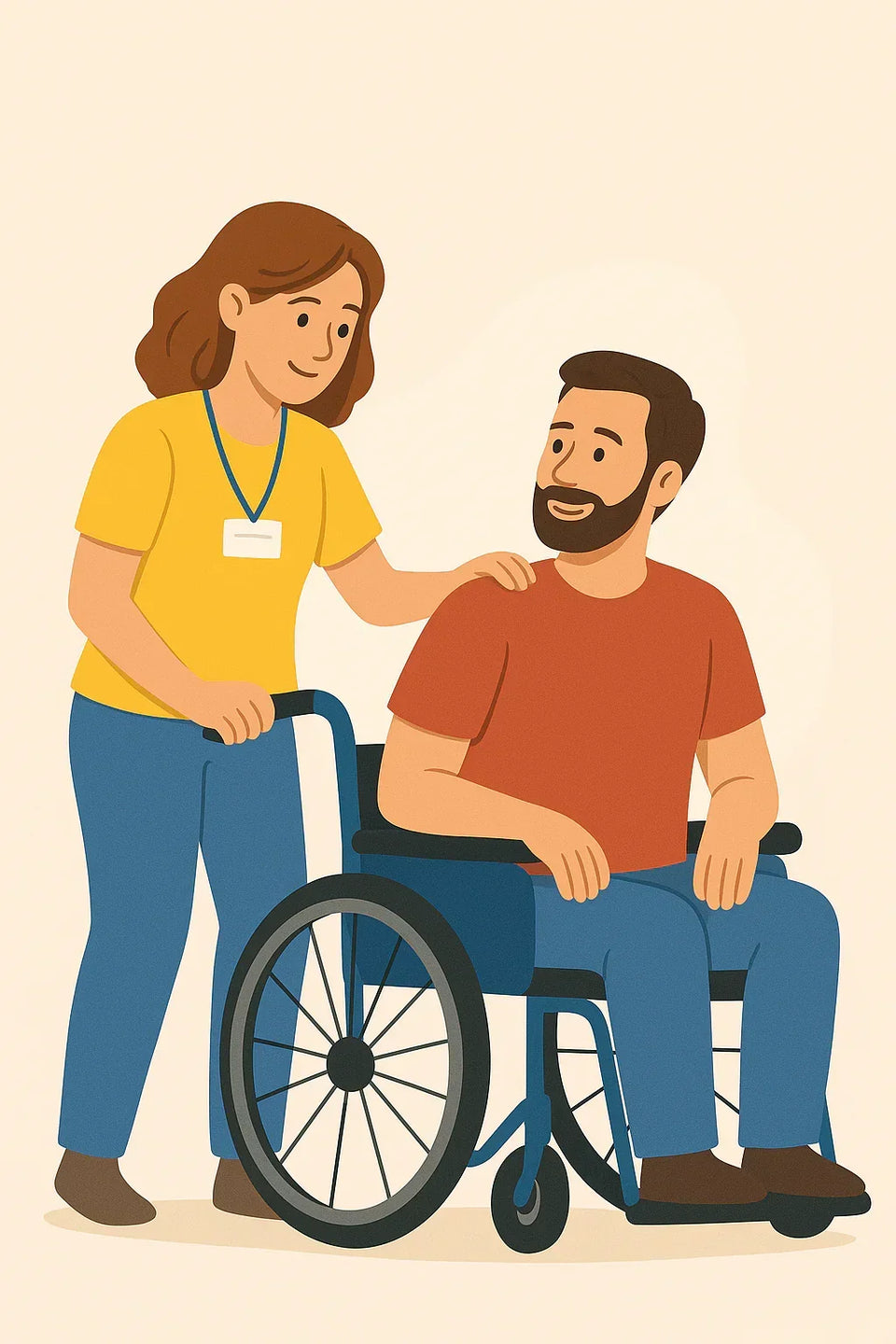
Living with Smith-Magenis Syndrome can bring strengths, needs and daily experiences that are different for every individual. This Australian guide explains the condition, its possible impact on everyday life, how NDIS eligibility is considered and the practical supports that may assist participants and families.
Understanding Smith-Magenis Syndrome
Smith-Magenis syndrome is a genetic developmental condition, often associated with a deletion on chromosome 17 or a change in the RAI1 gene. It can affect learning, speech, sleep, emotional regulation and adaptive skills. Sleep-wake differences and support with predictable routines can be particularly important, although the condition does not affect everyone in the same way.
A diagnosis alone cannot tell a family how someone communicates, learns, moves or manages everyday activities. Understanding that person's individual abilities and preferences is the starting point for meaningful support.
Characteristics and possible support needs
Features can vary greatly in their severity and may change over time. The following are possible considerations, not a checklist that every individual will experience.
- Differences in learning and adaptive daily living skills
- Delayed speech or communication differences, sometimes benefiting from alternative communication methods
- Disrupted sleep patterns that affect family routines and daytime participation
- Impulsivity or difficulties with emotional regulation, requiring respectful, person-centred support
- Potential sensory, hearing or other health differences for appropriate professionals to assess
How Smith-Magenis Syndrome may affect everyday life
A family might need a predictable morning schedule following disrupted sleep, strategies to help the person communicate choices, and consistent support to practise dressing, meal preparation or community routines.
When identifying needs, consider communication, learning, mobility, self-care, self-management, relationships and community participation. A useful record describes what the person can do independently, what they achieve with prompting, and which activities require hands-on help, specialist equipment or supervision. This provides a clearer picture than the diagnosis alone.
Person-centred practical approaches
- Plan clear, accessible routines with the person's involvement and sufficient flexibility for a difficult day.
- Identify communication needs and use language, visuals or devices that work for the individual.
- Work with qualified clinicians on sleep and behaviour concerns; avoid assuming behaviour has one cause.
- Use positive, non-punitive approaches that respect autonomy and address unmet communication or sensory needs.
Does Smith-Magenis Syndrome qualify for the NDIS?
Smith-Magenis syndrome appears in the NDIS's published List B as a condition likely to cause a permanent impairment. Eligibility requires assessment beyond that listing.
NDIS access is assessed under relevant legal requirements. These include age and residence, whether impairments are permanent or likely to be permanent, how substantially they reduce functional capacity, effects on work, study or social participation, and whether lifelong NDIS support is likely to be required. Early intervention is another pathway for some applicants, including young children who meet the relevant criteria.
For clarity, List A and List B in the NDIS published appendices are guides for access assessment, not a promise that everyone with a named diagnosis is automatically a participant. Read the NDIS disability requirements before relying on a condition list.
Evidence that helps explain permanent impairments and daily needs
Genetic diagnosis, occupational therapy assessment of adaptive skills, speech pathology reports, examples of sleep-related functional impacts and any relevant specialist functional assessments.
Recent and relevant professional evidence should connect the impairment to the person's everyday activities, not merely restate diagnostic terminology. Depending on their situation, it may be useful to prepare:
- A diagnosis and description of permanent impairment from an appropriately qualified professional.
- Specific examples of assistance needed with communication, learning, mobility, personal care or organising everyday life.
- Functional assessments and observations from allied health practitioners when appropriate.
- Evidence of supports and interventions already considered, the outcomes and any remaining limitations.
- Details of the person's goals, social or work participation and expected long-term disability-specific support needs.
If the person is a child, an early childhood partner may help explain the correct pathway and types of evidence to provide. Avoid presenting a general medical condition as proof of all the functional requirements.
NDIS supports that might be relevant
If a person is an NDIS participant, supports are determined by their individual plan, disability-related needs and funding rules. These may include assistance with daily living, support to build independent routines, community participation, assistive technology, occupational therapy, physiotherapy, speech pathology and support coordination where authorised and appropriate.
For example, an occupational therapist may review home access or self-care routines, a speech pathologist may assess communication methods, and a support worker may help carry out personalised daily and community goals. Some participants require disability-related health supports such as specialised feeding or seizure assistance, which need suitable funding, professional oversight and staff competency. NDIS guidance explains the boundary between disability-related supports and services supplied by the health system.
Medical diagnosis, medicines, hospital treatment and surgical procedures are generally healthcare responsibilities, not a benefit provided automatically through an NDIS plan.
How Beyond Health Services can help
We focus on what the participant wants to achieve, which tasks are most important and how support can strengthen independence, safety, choice and connection with others. Beyond Health Services can discuss personal care, daily living and community support, relevant allied health services, disability-related nursing and support coordination. We work with participants, nominees, families and support coordinators to understand communication preferences, individual routines and the requirements for a suitable worker.
Where clinical instructions are needed, they should come from the relevant treating professional. Any proposed service must be appropriate to the person's needs, approved funding and individual arrangements.
Frequently asked questions about Smith-Magenis Syndrome and the NDIS
Does Smith-Magenis Syndrome automatically qualify a person for the NDIS?
No. The condition is mentioned in the published List B guidance, but the NDIA applies the relevant requirements and considers supporting evidence for the individual. Being named on a list should not be confused with automatic approval of a funded plan.
What should families record before applying?
Describe a usual day and a difficult day. Include communication and mobility needs, daily living tasks that require support, existing equipment, impacts on participation and relevant assessments from treating professionals.
Do all people with Smith-Magenis syndrome have the same behaviours?
No. Communication, sleep, sensory and adaptive needs vary. Support planning should focus on the individual rather than stereotypes.
Is sleep disturbance part of the condition?
Disrupted sleep-wake patterns are recognised features for many people with Smith-Magenis syndrome. Medical assessment and treatment advice should come from qualified clinicians.
Can a support worker help build daily living skills?
Where the participant's approved plan permits, structured and person-led assistance can support routines, daily living and participation goals.
What is the difference between medical treatment and disability support?
Healthcare diagnosis and treatment normally remain responsibilities of the health system. NDIS funding may support eligible disability-related daily living and functional needs where the support meets applicable rules and the person's approved plan.
Let's discuss practical support
If you're exploring support for yourself, your child or someone you work with, tell us about their goals and preferred routines. Our team can talk through suitable next steps and the referral process.
Contact Beyond Health Services · support@beyondhealthservices.com.au
Information reviewed October 2026. This guide is general information, not medical or NDIA eligibility advice. Clinical background: MedlinePlus Genetics. Eligibility: NDIS.