Understanding the NDIS • Home and living
SIL and SDA can appear in the same conversation, but they pay for different things. Understanding the distinction helps you ask better questions before considering a move.
The short answer
Supported Independent Living (SIL) funds a package of assistance or supervision. Specialist Disability Accommodation (SDA) funds eligible specialist housing. Some participants have both; approval for one does not automatically mean approval for the other. Ordinary living costs and the participant’s rent contribution also need to be budgeted separately.
Compare what each type of funding does
| Question | SIL | SDA |
|---|---|---|
| What is funded? | Disability-related assistance and supervision. | Eligible specialist accommodation. |
| What should I examine? | Tasks, staffing arrangements, timing and how support fits your needs. | The approved housing type, design features, location and suitability. |
| Does it automatically include the other? | No. | No. |
| What should be separated in quotes? | Support charges and any other services. | Accommodation funding, rent contribution and ordinary household costs. |
Think of two separate questions: “What kind of home meets my needs?” and “What help do I need while living there?” A suitable answer to one can still leave a problem with the other.
Do I need both SIL and SDA?
Not necessarily. SIL is intended for people with higher support needs requiring assistance or supervision across the day and overnight. SDA has separate requirements relating to extreme functional impairment or very high support needs and the need for specialist housing.
Some people need extensive assistance in a home that is not SDA. Others may need specialised housing features with support arranged through a different approved model. Your evidence and funding decision need to address your own circumstances.
A vacancy advertisement does not prove that you meet the funding requirements. Ask for confirmation of your approved support and accommodation arrangements before signing or planning a move.
Compare the home and the support separately
Questions about the home
- Can I use the bedroom, bathroom, kitchen and outdoor areas in the way I need?
- Does the design match my approved accommodation requirements?
- How will equipment, access and evacuation needs be checked?
- What privacy, visitors and household arrangements would apply?
- What are my rent contribution, bills and other personal costs?
Questions about support
- What assistance is individual, and what is shared?
- What happens if two residents need help at the same time?
- How are overnight needs covered?
- What skills and participant-specific training will workers have?
- How are absences, emergencies and changes in needs handled?
Record answers in separate columns. This makes it easier to identify whether a concern is about the property, the service or both.
What does shared support mean in practice?
Do not assess an arrangement only by the number of workers in the building. Ask how the roster translates into assistance at the times you actually need it.
Illustrative scenario: Two residents prefer morning routines at similar times. Ask how the provider would manage competing needs, what individual assistance is planned and how changes would be agreed. A broad promise of “24-hour support” does not answer those practical questions.
Also discuss compatibility: noise, routines, visitors, communication, privacy and how disagreements are handled. A technically accessible property may still be a poor fit if the household arrangement does not work for you.
What agreements and costs should I check?
Ask who is responsible for accommodation and who delivers support, including where related organisations are involved. Obtain understandable documents showing services, charges, notice periods, complaint processes and what happens if you want a change.
For SDA, official guidance requires a written service agreement and describes a reasonable rent contribution subject to the applicable maximum. Ask the provider to show the calculation and explain which expenses are outside NDIS funding.
Before committing, write a personal weekly budget for rent, food, utilities, transport and other expenses. Keep it separate from the NDIS support forecast. Ask an independent adviser or advocate to help if you cannot understand the arrangement.
What is the next step if I am exploring a move?
- Describe your preferred living arrangement and current support gaps.
- Ask your NDIS contact which home-and-living options should be explored.
- Clarify what professional evidence is needed before paying for assessments.
- Compare realistic options, including alternatives to SIL or SDA.
- Wait for relevant funding decisions and confirm service suitability before committing.
- Plan the move, handover and first weeks of support in detail.
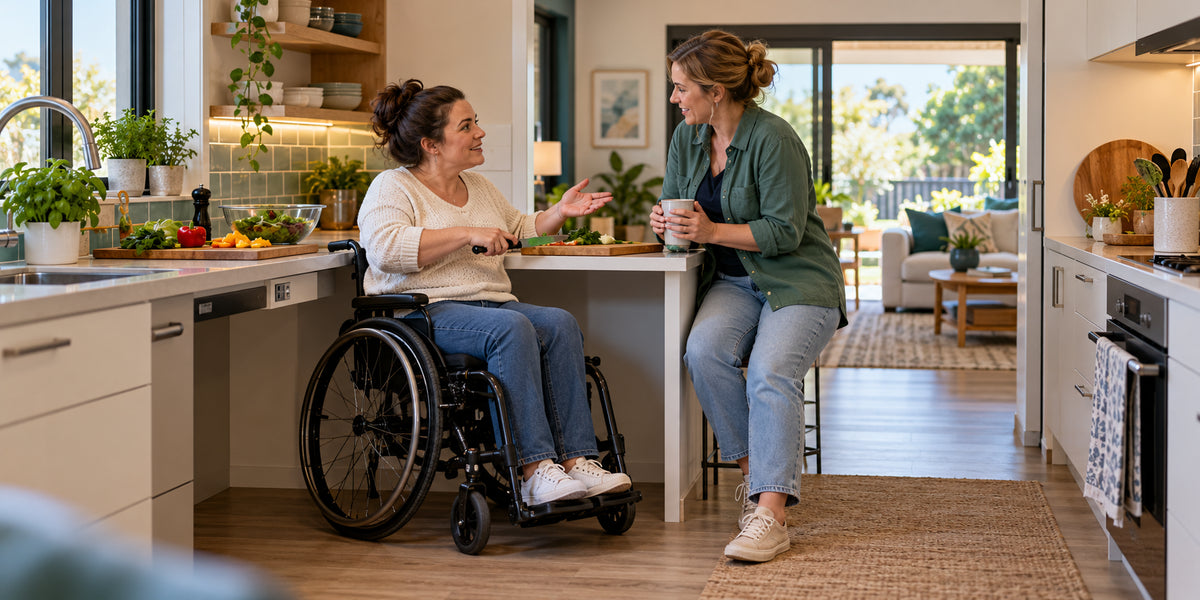
For a broader starting point, read what housing and home support the NDIS can fund. The image on this page illustrates a home-support setting; it is not a property listing or a claim of current accommodation availability.
Common questions
Does SIL pay my rent?
No. SIL funds support, not ordinary rent or groceries. Ask for a clear separation of support charges and personal household expenses.
Does SDA include support workers?
No. SDA is the accommodation component. Assistance within the home needs a separate suitable support arrangement.
Can I choose a home just because it has an SDA vacancy?
A vacancy is only one part of the decision. Check your approved funding, the property’s suitability, the support arrangement, agreements and personal costs before committing.
Ask about support at home
Tell Beyond Health Services about the assistance you need and your location. Ask about service suitability and current availability. This article does not advertise a housing vacancy.
Ask about supportOfficial sources and further reading
- NDIA: Supported Independent Living
- NDIA: Specialist Disability Accommodation
- NDIA: SIL guideline, September 2026
- NDIS Commission: SIL registration transitions
Guidance can change. Check the linked official information and your current plan before committing funding.





















