Understanding the NDIS · Therapy and daily living
Occupational therapy can help a person build, adapt or maintain the skills they use at home, work, school and in the community.
The short answer
The NDIS may fund occupational therapy when it is an evidence-based therapy support that helps a participant build or maintain functional capacity and meets the funding criteria in their plan. An OT may work on practical daily tasks, recommend strategies or assess equipment and home modifications. An assessment or recommendation is not automatic approval for a purchase or plan funding.
What does an occupational therapist do?
Occupational therapists (OTs) help people participate in everyday activities that matter to them. This may include personal care, meal preparation, getting around the home, using tools, working, studying, volunteering, hobbies or community participation. An OT looks at the person, the task and the environment, then works with them to find practical ways to do the activity.
Depending on the goal, an OT may teach a new strategy, adapt how a task is done, recommend equipment, assess functional capacity or provide evidence about support needs. The participant should be involved in setting priorities and deciding what strategies feel right.
When may NDIS funding cover OT?
The NDIA describes therapy supports as evidence-based services that help participants build or maintain skills and independence in daily life. OT can be included under capacity-building therapy supports when it is directly related to disability support needs, has functional goals and meets the NDIS funding criteria. Some maintenance therapy may help a person keep abilities or slow the loss of functional skills.
Having OT funding in a plan does not mean every OT service or item is automatically covered. Check the budget, funding period, plan conditions and the service quote. The NDIS decides what funding is included; an OT does not approve a plan.
What can OT support look like?
- Daily routines: break a morning routine into manageable steps or practise using an adaptive method for dressing.
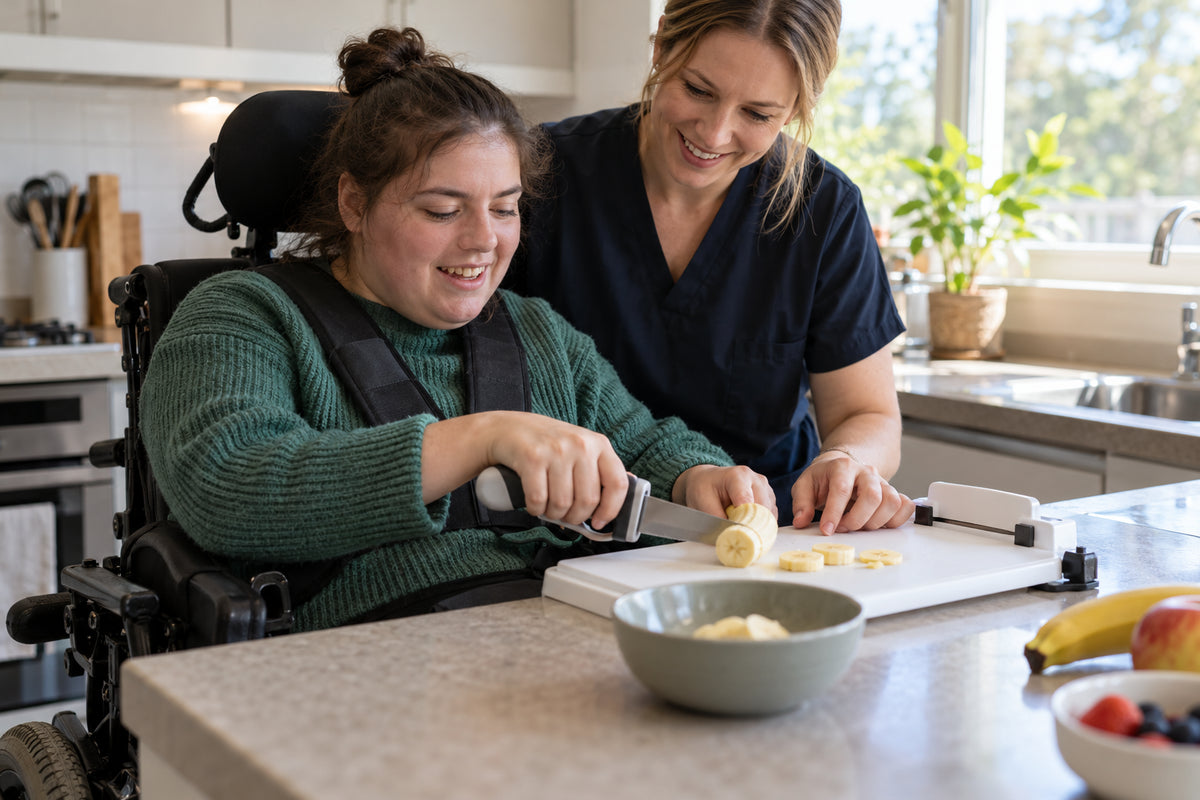
- Meal preparation: assess how someone can prepare food safely and independently using suitable equipment or a different workflow.
- Access at home: assess barriers to entering a bathroom or using kitchen spaces and recommend changes for consideration.
- Assistive technology: trial equipment such as a shower chair, mobility aid or communication access tool and explain what evidence is needed.
- Work or study: identify ways to manage tasks, tools, fatigue or sensory barriers in a particular setting.
Example: A participant wants to make breakfast without relying on a family member to cut food and reach kitchen items. An OT might observe the task, ask what matters to the person, explore low-cost changes or adaptive equipment, and practise the new routine. The goal is connected to a real activity the participant chose.
OT assessments, equipment and modifications
An OT may provide evidence for an assistive technology request, functional capacity assessment or home modification. The type of evidence depends on the request and risk or cost of the item. For higher-cost or more complex supports, the NDIA may require assessment information, quotes and approval before purchase or construction.
For home modifications, the NDIA says the home must be owned by the participant or the owner must agree to the changes. Do not order equipment, alter a home or pay for an assessment assuming the NDIS will reimburse it. Check the relevant process with the my NDIS contact and keep the assessment, quote and written decisions.
How to plan OT support in your plan
- Choose an everyday activity that matters to the participant.
- Describe what is difficult, what help is currently needed and what the participant wants to do differently.
- Agree on a measurable functional goal with the OT.
- Ask how the OT will assess the task and what options they will consider before recommending equipment or changes.
- Check the participant’s plan for therapy funding and any assessment or approval requirements.
- Agree on session length, report charges, travel costs and how progress will be reviewed.
A useful OT plan explains the activity, the participant’s starting point, the strategy or equipment being trialled, and how the participant will know if it helps.
Common questions
Does NDIS fund all occupational therapy?
No. OT must be a disability-related support that meets NDIS funding criteria and the participant’s plan. Some health or other services may be the responsibility of another system.
Can an OT approve assistive technology?
An OT can assess needs and provide recommendations or evidence. The NDIA makes funding decisions and may require approval before purchase, particularly for higher-cost items or modifications.
Can I use OT funding for an assessment?
It depends on the plan and the purpose of the assessment. Check the available therapy budget and confirm any report or assessment costs before booking.
Talk through your support needs
Tell us what everyday activity or goal you would like help with. We can discuss whether our OT services may suit and explain availability and costs.
Contact Beyond Health ServicesOfficial sources and further reading
- NDIA: What are therapy supports?
- NDIA: Capacity-building supports
- NDIA: Functional capacity assessments
- NDIA: Home modifications
NDIS guidance and plan rules can change. Check current information and your approved plan before booking or paying for support.





















